
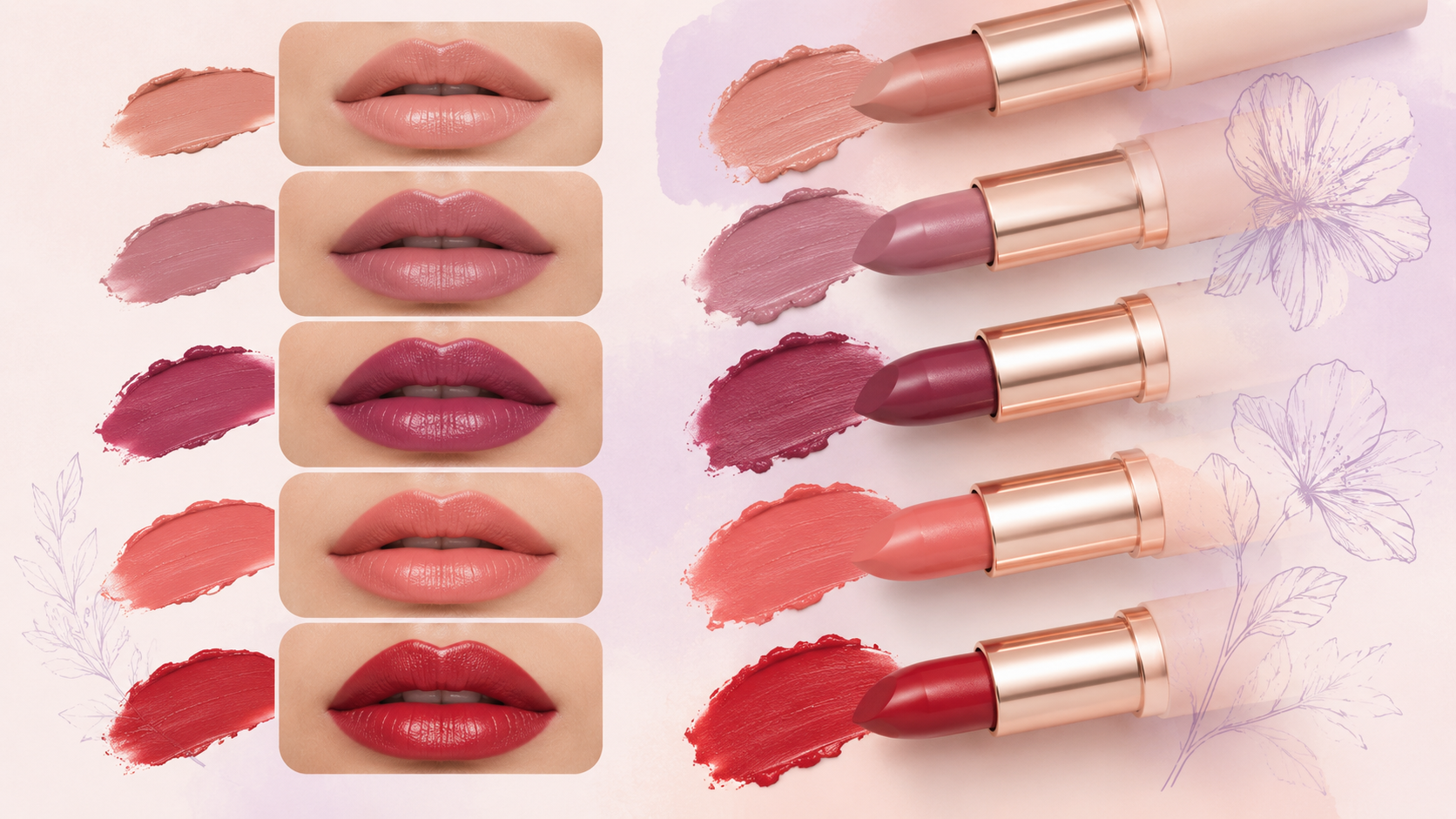
Rosy Nude, Mauve, Berry, Coral, and Red Lip Color Families
Lip-color names vary between brands, but most shades can be understood by their color family, undertone, and depth. Recognizing those qualities is more useful than relying on a shade name alone.
Rosy nude
Rosy nude combines beige, pink, rose, or soft brown. It is useful for everyday looks because it adds definition without becoming the strongest feature. Choose enough depth to remain visible rather than matching the skin exactly.
Mauve
Mauve sits between rose, violet, and muted brown. It can look polished and softly dramatic. Cooler mauves contain more violet; warmer versions include more rose or brown.
Berry
Berry shades range from raspberry and cranberry to plum. They create stronger contrast and work well for evening or statement makeup. A sheer berry stain feels lighter, while an opaque cream or matte appears more dramatic.
Coral
Coral blends pink, peach, and orange. Softer peach-coral can brighten a neutral look, while saturated orange-coral becomes a focal point. Coordinate the blush gently rather than matching both products at maximum intensity.
Red
Red may lean blue, neutral, orange, brown, or deep wine. A clear red creates high contrast; brick and brown-red shades appear more muted. The most wearable red is the one whose depth and undertone feel balanced with the rest of the makeup.
How to choose
- Compare the shade to the natural lip rather than only to the hand.
- Consider whether the eye makeup is soft or dramatic.
- Test the color in ordinary indoor and natural-looking light.
- Adjust intensity with liner, blotting, gloss, or a fingertip application.
Common mistakes
A nude shade that is too pale can erase the lip shape. Strongly cool or warm colors may look different after mixing with the natural lip tone, and online images can vary by lighting and screen settings.
Beauty Blueprint note: Color rules are starting points. Personal preference, clothing, lighting, and the desired mood matter as much as undertone labels.