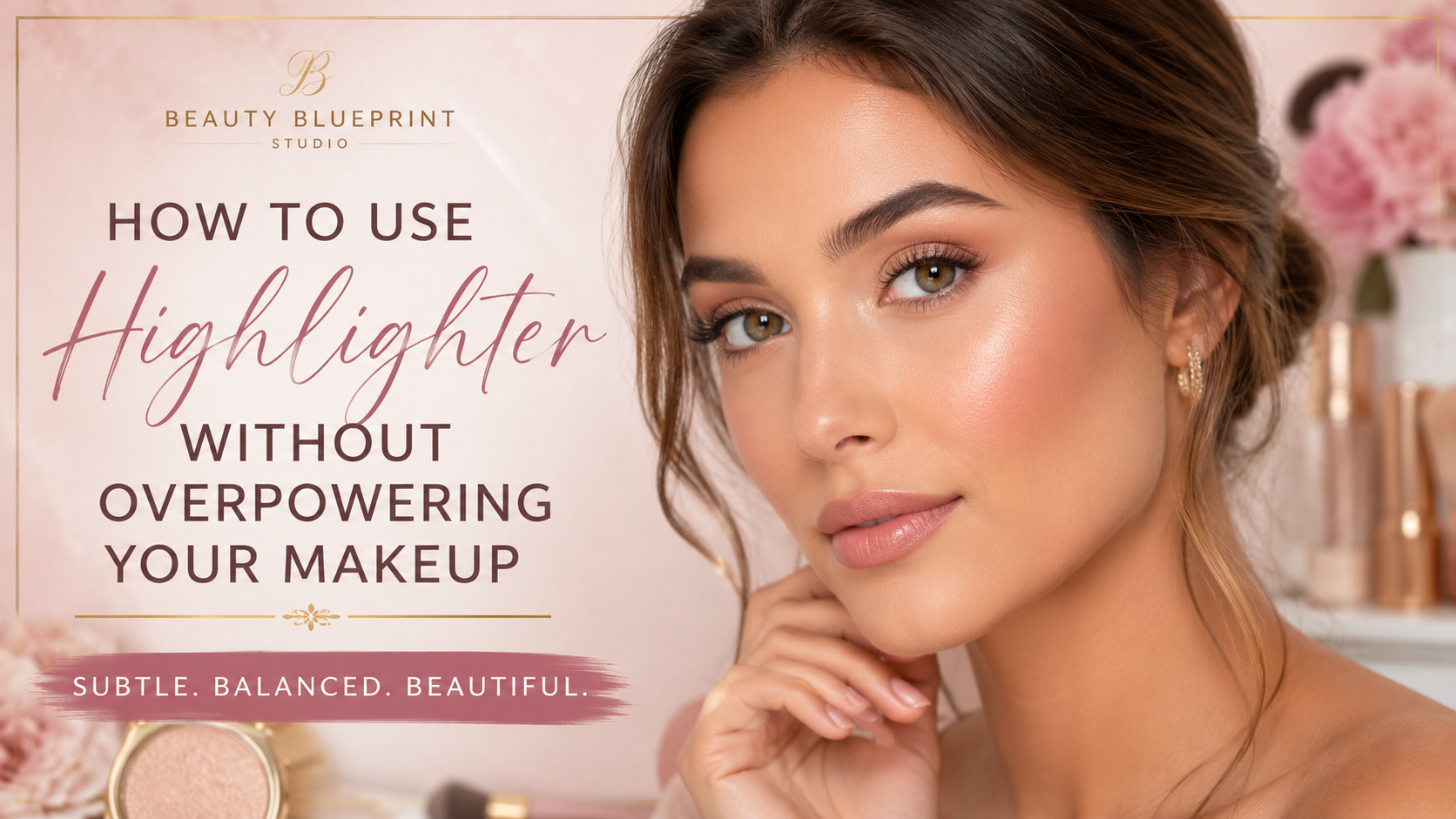
How to Use Highlighter Without Overpowering Makeup
Highlighter is most effective when it supports the structure and finish of the makeup. A small amount placed precisely usually creates more polish than a wide stripe of intense shimmer.
Choose the right texture
Fine pearl or satin finishes create a softer reflection. Larger glitter particles and highly metallic formulas produce a more dramatic effect and can make surface texture more noticeable under direct light. Cream and liquid formulas often blend naturally into a radiant base, while powders add controlled intensity over set makeup.
Place it on selected high points
- Upper cheekbone, stopping before the most textured area beneath the eye.
- A small touch at the inner corner of the eye.
- A light amount beneath the brow arch, not across the entire brow bone.
- A tiny amount on the cupid's bow when it complements the lip look.
The nose does not require a full bright stripe. A very small touch on the bridge or tip can be used when desired, but keep it balanced with the rest of the face.
Match the makeup goal
For everyday makeup, use a soft sheen that becomes visible mainly when the face turns. For soft glam, layer slightly more on the upper cheekbone. For dramatic makeup, build intensity gradually while preserving smooth edges.
Blend the borders
After placing highlighter, use a clean brush, sponge, or fingertip to soften the perimeter. The reflection should appear to emerge from the base rather than sit as a separate stripe.
Check more than one light source
Examine the result in front-facing light and from the side. Highlighter that looks subtle in dim indoor lighting can appear much stronger in daylight or flash photography.