Contour vs. Bronzer: What’s the Difference?
Contour vs. Bronzer: What’s the Difference?
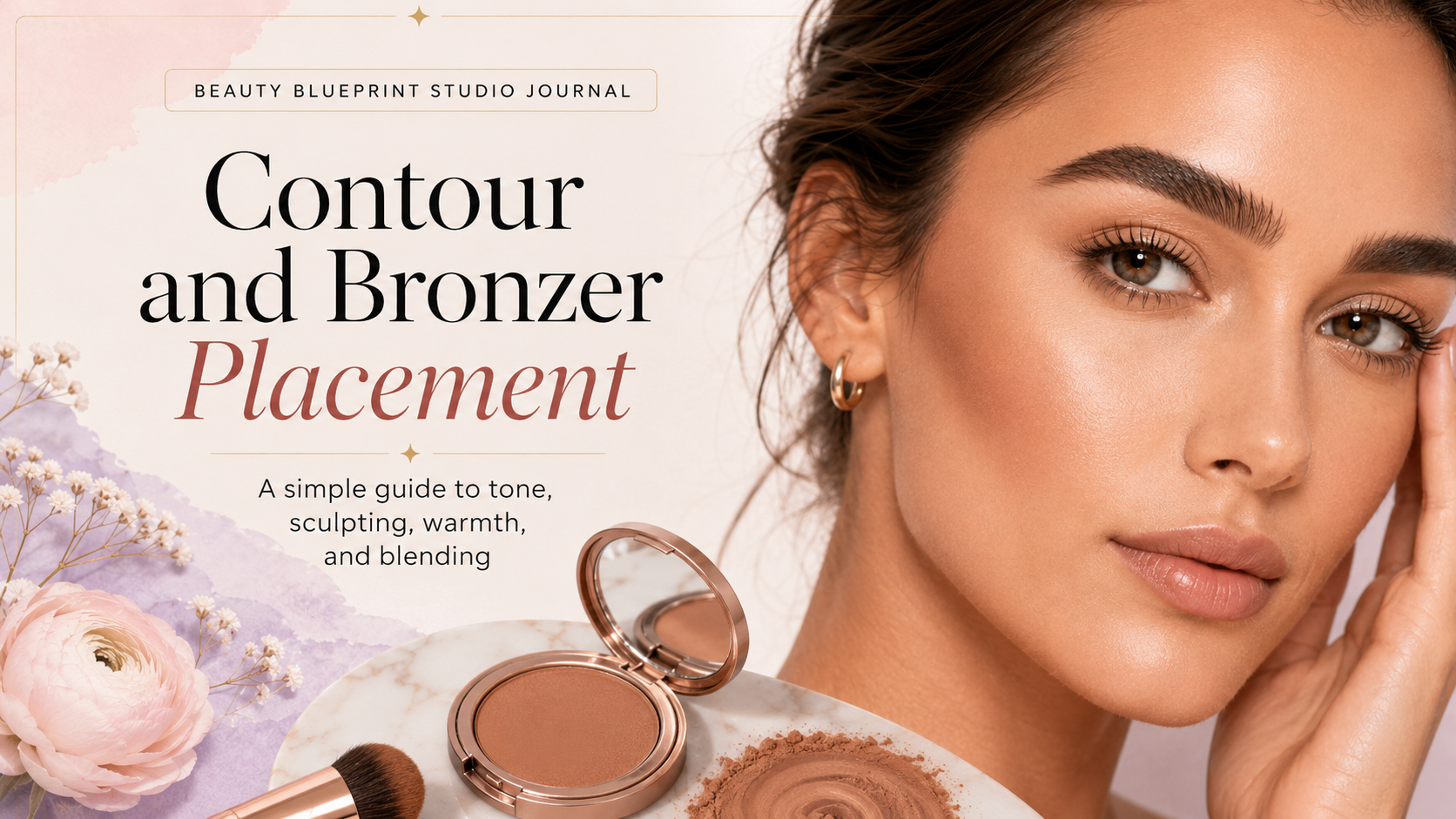
Contour and bronzer are often grouped together, but they serve different visual purposes. Understanding that difference makes both products easier to place and blend.
Contour Creates the Appearance of Shadow
Contour is used to add controlled depth or definition. It normally works best in a neutral or slightly cool tone that resembles a natural shadow rather than an orange or glowing tan.
Common Contour Placement
- Beneath the outer cheekbone, stopping before the mouth
- Lightly along the temple when useful for balance
- Along portions of the jawline when additional definition is desired
- Very sparingly around the nose when the technique is appropriate and carefully blended
Bronzer Adds Warmth
Bronzer is used to restore or add warmth where the face would naturally receive color. It is usually warmer than contour and can be matte, satin, or softly luminous.
Common Bronzer Placement
- Temples and upper forehead
- Upper outer cheeks
- Lightly across areas that naturally catch the sun
Tone and Texture
- Contour: neutral-to-cool, usually matte, used in narrower controlled zones.
- Bronzer: warm, matte-to-satin, blended more broadly for healthy color.
Which Goes First?
After complexion products, apply contour first to establish structure. Add bronzer next to bring warmth back into the face. Follow with blush and then highlight. Cream and powder formulas can require a different order, so keep like textures together and set creams before adding heavy powder.
Common Mistakes
- Using orange bronzer as a deep contour shadow
- Dragging cheek contour too low or too close to the mouth
- Applying bronzer in a solid dark band
- Using too much product before blending
- Ignoring the actual cheekbone position
A Natural Result
Contour should look like subtle depth, not a stripe. Bronzer should look like warmth, not a mask. Build both gradually and check the result in natural light.