How to Identify Your Eye Shape
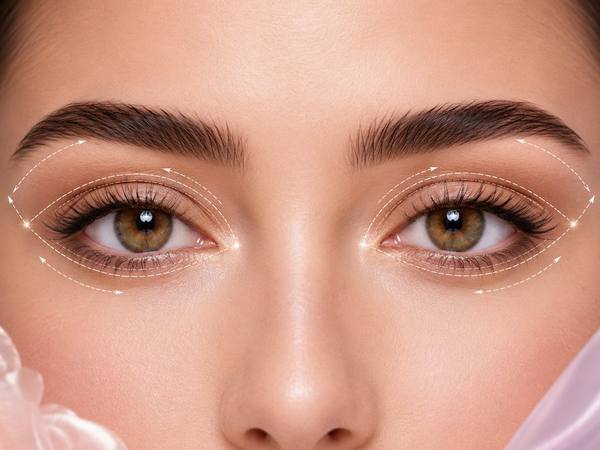
Eye-shape labels are useful because they help explain where shadow and liner may be most visible. They are not rigid categories, and many women have a combination of two or more characteristics.
Look at Five Features
1. Crease Visibility
With the eyes open and relaxed, check how much of the crease and mobile lid remain visible. Limited visible lid space can indicate hooded characteristics, while a clearly visible crease and lid may support other placement styles.
2. Outer-Corner Angle
Imagine a horizontal line through the inner and outer corners. If the outer corner sits higher, the eyes have an upturned characteristic. If it sits lower, they have a downturned characteristic.
3. Depth and Prominence
Deep-set eyes appear positioned farther beneath the brow bone. Prominent eyes project more visibly forward. These characteristics affect where depth, brightness, and liner are most flattering and readable.
4. Shape of the Eye Opening
Almond-shaped eyes usually taper at the inner and outer corners, with the iris touching or nearly touching the upper and lower lids. Round eyes tend to show more visible white around the iris and have a more open circular appearance.
5. Spacing
Compare the distance between the eyes with the width of one eye. A smaller distance suggests close-set characteristics; a larger distance suggests wide-set characteristics.
Common Eye-Shape Characteristics
- Almond: tapered corners and balanced proportions.
- Round: open appearance with more visible white around the iris.
- Hooded: upper-lid skin overlaps part of the crease or mobile lid.
- Monolid: little or no visible crease.
- Deep-set: eyes sit more deeply beneath the brow bone.
- Prominent: eyes project more visibly forward.
- Upturned: outer corners sit higher than inner corners.
- Downturned: outer corners sit lower than inner corners.
- Close-set: the space between the eyes is narrower than approximately one eye width.
- Wide-set: the space between the eyes is wider than approximately one eye width.
Why Placement Matters More Than the Label
A person can have almond, hooded, and slightly downturned eyes at the same time. The most useful makeup plan considers all visible characteristics, not only one category.
Simple Starting Rule
Place brightness where you want the eye to appear more open, controlled depth where you want added structure, and liner where it remains visible with the eyes open. Always test the placement while looking straight ahead rather than applying everything with the eye closed.